I found this neat activity the other day in my hunt for FNMI math material. In our grade 3 math curriculum linear measurement unit we look at perimeter but not necessarily area. However, this could be adapted for perimeter and the area portion could be used as an extension activity or for those grades/other curricula that encompass this concept. Also, the use of the term "Kokum" lends nicely into cultural dialogue of terms for grandmothers and grandfathers worldwide (and can include the various cultures found in our own classrooms).
Again, this activity is from the Saskatchewan Government (alas, the document in whole which I can not seem to find online). If any of my readers come across such document or know of it's online whereabouts, please let me know as I'd love to direct link it to my website for further acknowledgements.
In our school division we have PAAL schools. The teachers in these schools will choose a goal and work with coaches and superintendents towards the achievement of their goal throughout the school year. When contemplating an area I would like to grow in, my passion (math) and my desired area of growth (FNIM incorporation into teaching) melded. Therefore, my focus this year is ways to incorporate FNIM (First Nation, Inuit, Metis) content into mathematics. The purpose of this blog is to share ideas, thoughts, lessons and methods I've tried in my classroom.
Sunday, May 25, 2014
Wednesday, May 7, 2014
Host Drum Problem Solving Task
I return to concepts taught in math as the year progresses to ensure student understanding and since math concepts continue even after a unit is "completed". This ensures that students continually use the skills learned and apply them to various situations so that they become understood.
Last week, students worked on a Host Drum problem solving task that incorporated their knowledge of time and addition. Each student received a sheet as follows:
To prep for the task, we read about host drums and talked about pow-wows. I never showed a video of one, or even of a portion of pow-wow dancing, which I wish I would have and will definitely do next time. Then we looked at the examples of the host drum programs (group 1 and two) and made observations. The students observed that there were only 5 different songs but they could be used repeatedly. So we listed the 5 songs that were used (on the bottom of their sheet).
Next, I gave the students their task: to create a pow-wow program for the host drum for 1 hour. Considering the information on the sheet was in minutes, they needed to use their knowledge that an hour is 60 minutes to help them (the idea of conversions to similar units). Then we talked about starting with the grand entry and working from there. Here are a few examples of the students' work:
Last week, students worked on a Host Drum problem solving task that incorporated their knowledge of time and addition. Each student received a sheet as follows:
(Taken from a unit from Saskatchewan Education)
To prep for the task, we read about host drums and talked about pow-wows. I never showed a video of one, or even of a portion of pow-wow dancing, which I wish I would have and will definitely do next time. Then we looked at the examples of the host drum programs (group 1 and two) and made observations. The students observed that there were only 5 different songs but they could be used repeatedly. So we listed the 5 songs that were used (on the bottom of their sheet).
Next, I gave the students their task: to create a pow-wow program for the host drum for 1 hour. Considering the information on the sheet was in minutes, they needed to use their knowledge that an hour is 60 minutes to help them (the idea of conversions to similar units). Then we talked about starting with the grand entry and working from there. Here are a few examples of the students' work:
When they finished one, they were challenged to come up with another program.
We talked about proving that the total was 60 minutes and how to show this. This student showed it through addition equations with ongoing calculations. We also noted how groups of 10 were made. When asked why, this student said it was the easiest way to add and group the numbers.
The students really enjoyed this task and took on the challenge eagerly. It was also easy to modify for those students who needed by changing the time of the program. For these students, they made a program for 1/2 hour (30 minutes).
Saturday, April 26, 2014
Time & Moons
Within our time unit in math, students study the months of the year, days per month, create their own calendars, answer questions, make comparisons, and more. We talk about how we use the traditional Gregorian calendar - 12 months in a year with specific days per month. When looking to incorporate FNMI content into this area of math, I chose to do so with using moon cycles.
Students and I talked about how FNMI groups did not use the calendar we are currently familiar with to tell time as per months, days of the week, etc. Instead, they used their own methods of time measurement. One of these was using the moons (new, full, quarter). Sometimes FNMI would refer to "the next full moon" or "two moons away", etc. As we discussed this concept, students looked at how moons are represented on the Gregorian calendar and for this we each had our own calendar page (I'm a stickler for keeping old calendars for art and found that they came in super handy for this unit in math as well).
First, we looked at how the moons are represented on a calendar. Then we noted when a new or full moon was and how this didn't always coincide with the first day of the Gregorian calendar. Next, we compared how long it was from one moon to the next (ie. full moon to full moon). For this, we used calendars copied onto legal paper with four months so they could compare and see that moon to moon differed from our traditional "month to month".
Students found that there are 28 or 29 days in between moons. We then talked about how this was different from the calendar we use today. It was great to see students make various observations such as it's a shorter time span between moons than months, they start in different places (part of the month, day of the week). When we discussed why there would be 28 or 29 days in between moons, and not a consistent number, students were quick to note it was because some months had 30 days and others had 31.
We concluded the lesson by reading a tale from Keepers of the Earth, Native Stories and Environmental Activities for Children by Caduto, Michael J. and Bruchac, Joseph. The tale "How Coyote Was the Moon" talked about how the people needed a moon, because it was so dark, and someone had stolen the previous moon so they were looking for a new one. Coyote volunteered however his nosiness resulted in him not continuing to be the moon, and another one eventually chosen. This tale was a great way to bridge the concepts while including literacy into mathematics. This book also has other tales that work well with various math units.
Students and I talked about how FNMI groups did not use the calendar we are currently familiar with to tell time as per months, days of the week, etc. Instead, they used their own methods of time measurement. One of these was using the moons (new, full, quarter). Sometimes FNMI would refer to "the next full moon" or "two moons away", etc. As we discussed this concept, students looked at how moons are represented on the Gregorian calendar and for this we each had our own calendar page (I'm a stickler for keeping old calendars for art and found that they came in super handy for this unit in math as well).
First, we looked at how the moons are represented on a calendar. Then we noted when a new or full moon was and how this didn't always coincide with the first day of the Gregorian calendar. Next, we compared how long it was from one moon to the next (ie. full moon to full moon). For this, we used calendars copied onto legal paper with four months so they could compare and see that moon to moon differed from our traditional "month to month".
Students found that there are 28 or 29 days in between moons. We then talked about how this was different from the calendar we use today. It was great to see students make various observations such as it's a shorter time span between moons than months, they start in different places (part of the month, day of the week). When we discussed why there would be 28 or 29 days in between moons, and not a consistent number, students were quick to note it was because some months had 30 days and others had 31.
We concluded the lesson by reading a tale from Keepers of the Earth, Native Stories and Environmental Activities for Children by Caduto, Michael J. and Bruchac, Joseph. The tale "How Coyote Was the Moon" talked about how the people needed a moon, because it was so dark, and someone had stolen the previous moon so they were looking for a new one. Coyote volunteered however his nosiness resulted in him not continuing to be the moon, and another one eventually chosen. This tale was a great way to bridge the concepts while including literacy into mathematics. This book also has other tales that work well with various math units.
Thursday, April 3, 2014
Resources
I continue to update the Resource List on the side of the blog with digital and online links to information and resources I use in and to create my lessons. However, I've also found some great print resources that I'd like to share which have ideas for not only math but ELA, science, social studies and arts ed too.
Saturday, March 29, 2014
Bentwood Boxes
As I continue on this journey of incorporating FNMI content into my grade 3 math classroom, I find I do a lot of searching and locating information regarding various FN groups in Canada. Along with my research, I try to find connections between what I am learning and the outcomes my students need to achieve in math.
As we finish up our 3-D object unit, I wanted to find a FNMI lesson that would be beneficial to my students. To my excitement, I found out about Bentwood Boxes which connected nicely.
Bentwood boxes were cedar boxes made by West Coast FN (ie. such as, but not limited to, Haida and Salish). They were used for various purposes such as storing food and clothing, as well as ceremonial items. These boxes were used both in the home and on trips. More information about Bentwood boxes can be found at:
To begin the lesson, I showed students various images of Bentwood boxes and asked them what 3-D object they resembled. The students quickly showed their knowledge by connecting these to cubes and rectangular prisms.
We then discussed what these boxes are, where they originate from and I showed them a map of the West Coast of Canada so they could understand the location. Geography plays a great understanding in the different FNMI groups in Canada. Next we brainstormed different uses for these boxes and students elicited wonderful ideas that matched the information I had found, along with many more.
One of the neat things about Bentwood boxes is that the sides are made from one plank of cedar wood. This was cool as we discussed how the wood was bent after it is steamed, not cut and adhered in a manner we're more accustomed to thinking about. The students also made connections to other materials used to create structures (science unit) that are able to bend.
I was able to show the students an example of the steps used to create a Bentwood box (see above links) and a quick video via youtube highlighting the steaming and bending process: Making Bentwood Boxes
As we proceeded in the lesson, I then showed the students a net of a cube and some were quickly able to tell me it was a cube.
However, I told them that I did not understand how this was a cube since it was flat (at which point I grabbed a cube and held it to the SmartBoard to show that they were very different). Using a cube solid (manipulative) students then proved to me how the net and the cube were the same. Some of their responses / proofs were:
1) the flat squares on the net were the faces of the cube
2) the lines were the edges - and even the ones not touching a face (since an edge is where two faces meet), when we fold the net the edges will meet faces
3) the net needs to be folded to also create vertices
At this point I was completely thrilled at the connections and proofs my students were making. They were readily using math language and using definitions of terms to show their meaning. So, when I told them they were making their own version of a Bentwood box (ie. cube) the class response was "Yay!".
Just prior to beginning we noted the carvings on the boxes and discussed how these were special and important to each FN group. The carvings were representative of their group, culture and things that were important to them. Therefore, the students needed to draw images (one per face) on their cube net / bentwood box that were important to them.
Needless to say, students learned about Bentwood boxes, made great mathematical connections, communicated ideas, made proofs and incorporated elements of science and arts ed in this lesson. They did a great job of making some very personal boxes to share with their families.
You can use any printable cube net to make a Bentwood box. Some great websites I found were:
Monday, March 24, 2014
FNMI Structures & 3-D Objects
We've been delving into the world of 2-D shapes and 3-D objects in math as of late. While it's fun and educational to use our shapes to create various patterns (many lessons based on FNMI culture can derive from patterns), there are also ways to incorporate FNMI content into 3-D objects.
As students have learned the names of objects, they've also begun studying the objects in their world and how they relate or imitate these objects. For example: a tent is a rectangular prism, dice are cubes, boxes can be cubes and rectangular prisms, a birthday hat is a cone.
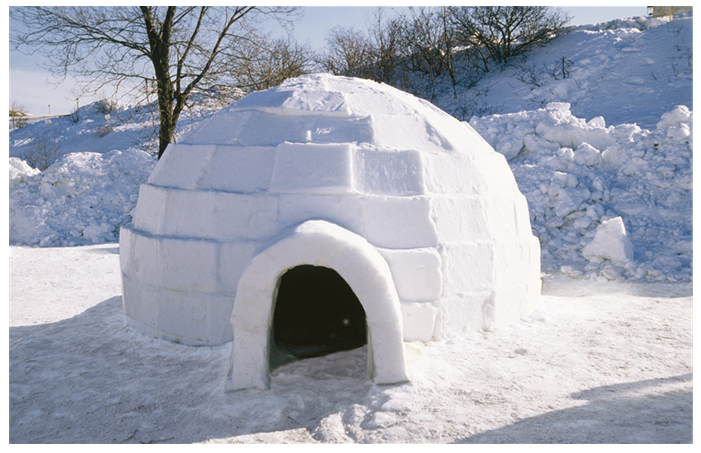
Using our knowledge of 3-D objects, students studied various pictures of FNMI structures (which tied in nicely to our science unit on structures) and found 3-D objects within these.
The pictures students looked at were:
The images were all placed in a SmartBoard file (to allow us to write on the images).
At first, students studied the images and discussed with a partner what 3-D objects they found within each structure. Then as a class, students shared their findings.
Here is what they discovered about FNMI structures and 3-D objects.
As students have learned the names of objects, they've also begun studying the objects in their world and how they relate or imitate these objects. For example: a tent is a rectangular prism, dice are cubes, boxes can be cubes and rectangular prisms, a birthday hat is a cone.
Using our knowledge of 3-D objects, students studied various pictures of FNMI structures (which tied in nicely to our science unit on structures) and found 3-D objects within these.
The pictures students looked at were:
Image courtesy: http://www.fortmcphersontent.com/products/tipis/canvas-tipis/
Image courtesy: http://www.scrapbookoftruth.com/2014/02/10/random-thoughts-igloo/
Image courtesy: http://commons.wikimedia.org/wiki/File:Inukshuk,_Whistler.jpg
The images were all placed in a SmartBoard file (to allow us to write on the images).
At first, students studied the images and discussed with a partner what 3-D objects they found within each structure. Then as a class, students shared their findings.
Here is what they discovered about FNMI structures and 3-D objects.
What I really loved about this lesson is that students started to really look at different structures and the 3-D objects related in their own worlds. They then were automatically making comparisons to the FNMI structures. Many students further questioned other FNMI structures which would lead nicely into an inquiry study.
Monday, February 3, 2014
Small Number, the Salmon Harvest & Division
As we moved from learning about multiplication to division, I wanted to keep as many ties to that unit as possible. When students make connections between their learning, concepts and ideas it makes it more concrete for them and they're able to create their own understanding with a base schema.
In our multiplication unit, we talked about how salmon is a symbol of persistence and a staple for many First Nations groups (as hunting, fishing and gathering were traditional ways of life for FNMI groups). As we move into division, I wanted to connect the ideas and theme together as we discuss how division is the opposite of multiplication and related to fact families. To continue with this theme, from my resources (print and person) I came across this video:
In this video, Small Number (a young boy) helps out with the salmon harvest. He learns many skills and the video shares with the audience how they fish (using nets). In our division unit, we're currently looking at the division strategy sharing. In using this strategy, students need to understand that they're sharing with a set number of groups and need to find the amount in each group. The video lends well to this concept as during it, there is reference to sharing fishing (dividing) among the families.
To extend using this video into division concepts, I came up with the following questions for students to work through:
If they caught 25 fish and there were 5 families, how many fish would each family get?
If there were 20 fish caught to be shared with 4 families, how many fish would each family get?
If 14 fish were caught and only 2 families were sharing, how many would each family get?
These problems offered critical thinking skills and offered realistic, FN connected ideas.
Here are a couple of students performing the task:
In our multiplication unit, we talked about how salmon is a symbol of persistence and a staple for many First Nations groups (as hunting, fishing and gathering were traditional ways of life for FNMI groups). As we move into division, I wanted to connect the ideas and theme together as we discuss how division is the opposite of multiplication and related to fact families. To continue with this theme, from my resources (print and person) I came across this video:
Small Number and the Salmon Harvest:
In this video, Small Number (a young boy) helps out with the salmon harvest. He learns many skills and the video shares with the audience how they fish (using nets). In our division unit, we're currently looking at the division strategy sharing. In using this strategy, students need to understand that they're sharing with a set number of groups and need to find the amount in each group. The video lends well to this concept as during it, there is reference to sharing fishing (dividing) among the families.
To extend using this video into division concepts, I came up with the following questions for students to work through:
If they caught 25 fish and there were 5 families, how many fish would each family get?
If there were 20 fish caught to be shared with 4 families, how many fish would each family get?
If 14 fish were caught and only 2 families were sharing, how many would each family get?
These problems offered critical thinking skills and offered realistic, FN connected ideas.
Here are a couple of students performing the task:
Subscribe to:
Posts (Atom)